Hablamos Español


Veterinary Surgery in Locust Grove, VA
As a pet owner, the thought of your beloved furry friend undergoing surgery can be daunting. However, there are times when surgery is necessary for the health and well-being of your pet. We will discuss the different types of veterinary pet surgery, including soft tissue surgery, spay and neuter, and gastropexy surgery.
The Importance of Veterinary Surgery
Improving Quality of Life
One of the main reasons for veterinary surgery is to improve the quality of life for your pet. Surgery can help alleviate pain, correct deformities, and treat diseases or injuries that may be hindering your pet’s ability to live a happy and healthy life.
Preventing Further Health Issues
In some cases, surgery may be necessary to prevent further health issues from arising. For example, if your pet has a tumor, removing it through surgery can prevent it from spreading and causing more serious health problems.
Emergency Situations
In emergencies, veterinary surgery can be lifesaving for your pet. Whether it’s a foreign object lodged in their throat or a serious injury, surgery may be the only option to save your pet’s life.
Sedation and Anesthesia in Pets
Sometimes sedation is needed to keep your pet calm and comfortable while we complete diagnostic testing (X-rays, ultrasound, or urine sampling) or minor procedures (torn nail removal, wound care, or biopsies). Sedation refers to the administration of medication to produce a state of calm or sleep. The level of sedation necessary to complete a given procedure varies by animal and the procedure being performed.
Other procedures require general anesthesia for completion. General anesthesia refers to the administration of medication to produce a state of complete unconsciousness. Some clients worry that general anesthesia is more dangerous than sedation. General anesthesia enables us to intubate our patients, allowing us to breathe for them and more closely monitor them during the procedures, making general anesthesia safer than sedation alone for some patients and some procedures. No matter the level of sedation or anesthesia needed, our doctors tailor their anesthetic plan specifically to your pet.
Lakewood Animal Hospital provides a variety of surgical and dental procedures requiring general anesthesia for your cat or dog including:
Spay and neuter
Soft tissue/general surgery (ex. growth removal)
Emergency surgery (ex. laceration repair, wound repair, foreign object removal)
Dentistry including extractions
Pre-Surgical Care for Pets
All patients are carefully examined prior to surgery. We recommend pre-surgical blood work so we can evaluate your pet’s kidney and liver function prior to undergoing anesthesia. We also have a blood test to help screen for heart problems in cats prior to anesthesia.
Patient Monitoring
We have state-of-the-art anesthetic and surgical equipment. We have equipment to monitor:
ECG/EKG and heart rate
Blood oxygen saturation
Blood pressure
End tidal CO2 and respiratory rate
Body temperature
In addition to monitoring the above parameters, we have equipment to keep your pet warm and comfortable and ensure they are breathing properly:
IV fluid pumps
Thermal warming devices
Ventilator
Pain Management
We use a multi-modal approach to pain management. This means often using several different pain medications that work in different ways to prevent and treat pain. This allows us to use lower doses of the medications and get the benefit of the pain medications with fewer side effects.
Post-Surgery Care for Pets
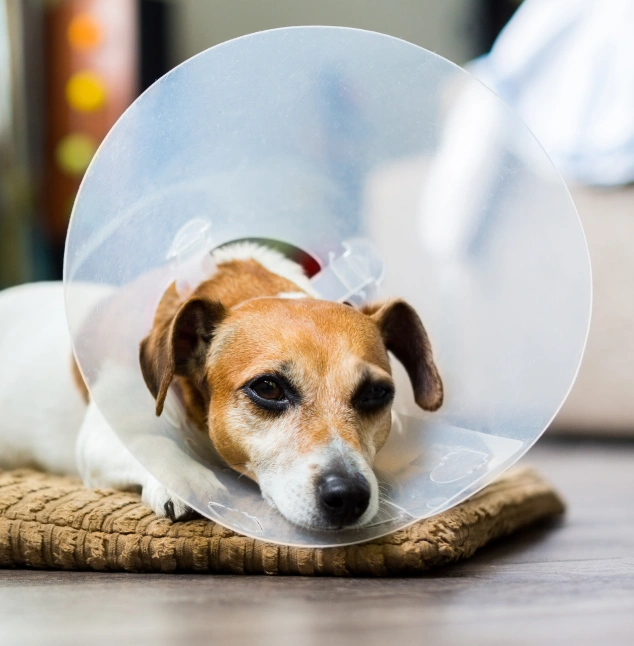
After any type of surgery, it is important to follow our instructions for post-surgery care. This may include administering medication, keeping your pet calm and confined, and monitoring the incision site for any signs of infection. It is also important to limit your pet’s activity and prevent them from licking or chewing at the incision site.
Veterinary Soft Tissue Surgery
Soft tissue surgery refers to any surgery that is not related to bones or joints. This type of surgery is commonly used to treat conditions such as tumors, abscesses, and cysts. It can also be used for procedures such as wound repair and removal of foreign objects. Soft tissue surgery is typically performed under general anesthesia and may require your pet to stay at the veterinary hospital for a few days for monitoring and recovery.
Common Soft Tissue Surgeries
Tumor/mass removal
Cyst removal
Wound repair
Foreign object removal
Biopsies
Spay and Neuter Procedures
Spaying and neutering are common surgical procedures that involve removing the reproductive organs of your pet. Spaying is the removal of the ovaries and uterus in female pets, while neutering is the removal of the testicles in male pets. These procedures are recommended for all pets, as they not only prevent unwanted pregnancies but also have health benefits such as reducing the risk of certain cancers and behavioral issues.
Benefits of Spaying and Neutering
Prevention of unwanted pregnancies and litters
Reduces the risk of certain cancers such as mammary cancer in female animals and testicular cancer in male animals
Lowered risk of certain infections and diseases, such as uterine infections in female animals
Decreased aggression and territorial behavior in male animals
Elimination of heat cycles and associated behaviors in female animals
Reduced risk of roaming and getting lost or injured in search of a mate
Helps control the pet population
Recovery and Aftercare
The recovery time for spaying and neutering is relatively short, and most pets will be back to their normal selves within a few days. However, it is essential to follow our instructions for aftercare to ensure a smooth recovery.
Some tips for caring for your pet after the spay or neuter procedure include:
Keep your pet calm and confined for the first few days to prevent them from jumping or running.
Monitor the incision site for any signs of infection, such as redness, swelling, or discharge.
Prevent your pet from licking or chewing at the incision site, as this can cause irritation and delay healing.
Administer any prescribed medications as directed by us.
Limit your pet’s activity for the first week after surgery to allow for proper healing.