
Hablamos Español


Veterinary Diagnostics in Locust Grove, VA
As a pet owner, it can be stressful when your pet is not feeling well. You want to make sure they receive the best care possible, and that includes accurate and timely diagnosis. That’s where veterinary diagnostics comes in. With the use of advanced technology and techniques, we can provide comprehensive diagnostic services to ensure your pet receives the proper treatment. We will discuss the different types of diagnostic services available for your pet, including X-rays, ultrasounds, in-house laboratory testing, and echocardiograms.
Benefits of Veterinary Diagnostics
The use of diagnostic services in veterinary care offers many benefits for both pets and their owners. By accurately diagnosing a condition, we can provide the most effective treatment plan for your pet. This can lead to a quicker recovery and a better quality of life for your furry friend. Additionally, early detection of certain conditions can lead to more successful treatment outcomes.

Digital Pet X-ray
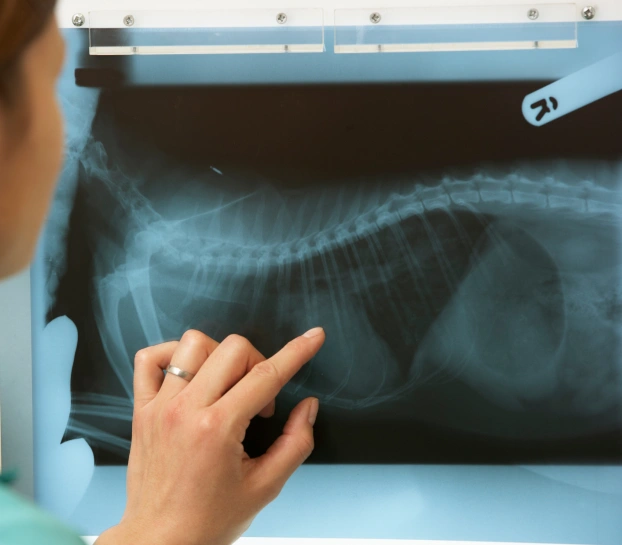
Digital pet x-ray, also known as radiographs, are one of the most common diagnostic tools used in veterinary care. They use electromagnetic radiation to produce images of the internal structures of your pet’s body.
Pet x-rays are particularly useful in detecting:
- Bone fractures
- Foreign objects
- Abnormalities in the lungs and heart.
- They are also used to monitor the progression of certain diseases, such as arthritis.
The Process:
The first step in performing a veterinary X-ray is to prepare the pet for the procedure. This may involve sedation or anesthesia, depending on the pet’s size and temperament.
The pet will be placed on a table or platform in the x-ray room. We will then position the pet in the desired position for the x-ray. Proper positioning is crucial in obtaining accurate and clear x-ray images. The positioning of the pet will depend on the area of the body being x-rayed.
For example, if the chest and/or abdomen is being x-rayed, the pet may be placed on their side with legs extended for some images and on their belly or back for other images.
Veterinary Ultrasounds
Veterinary ultrasounds use high-frequency sound waves to create images of the internal structures of your pet’s body.
The first step in performing a veterinary ultrasound is to prepare the pet for the procedure. This may involve shaving the fur in the area being examined and applying a gel to the skin to help transmit the sound waves. The pet will then be positioned on a table or held by a veterinary technician to ensure they remain still during the procedure.
Next, we will use a handheld device called a transducer to emit high-frequency sound waves into the body. These sound waves will bounce off the internal structures and create images that are displayed on a monitor. We will move the transducer around the area being examined to capture different angles and views.
The entire procedure usually takes between 20 to 30 minutes, depending on the size and condition of the pet. It is a painless and non-invasive procedure, so pets do not require any sedation or anesthesia. However, if the pet is anxious or uncooperative, we may administer a mild sedative to keep them calm and still.
In-House Laboratory Testing
In-house laboratory testing allows us to quickly and accurately diagnose a variety of conditions. This type of testing can include checking for parasites, blood work, urine analysis, and fecal exams. By having an in-house laboratory, we are able to get results in a timely manner, allowing for prompt treatment of your pet’s condition. We also utilize commercial veterinary laboratories for specialized diagnostics and consultations.
Parasites are organisms that live on or inside another organism, known as the host. They can cause a variety of health problems for your pet, including skin irritation, digestive issues, and even organ damage. Some parasites can also be transmitted to humans, making it important to keep your pet parasite-free for the safety of your family.
Echocardiograms
Echocardiograms, also known as cardiac ultrasounds, are a specialized type of ultrasound used to evaluate the heart’s structure and function. They are particularly useful in diagnosing heart conditions, such as heart murmurs, and can also be used to monitor the progression of heart disease. Echocardiograms are non-invasive and do not require sedation, making them a safe option for pets of all ages.